Board Oil That Makes A Difference

What Oil Should You Use On A Wooden Chopping Board?
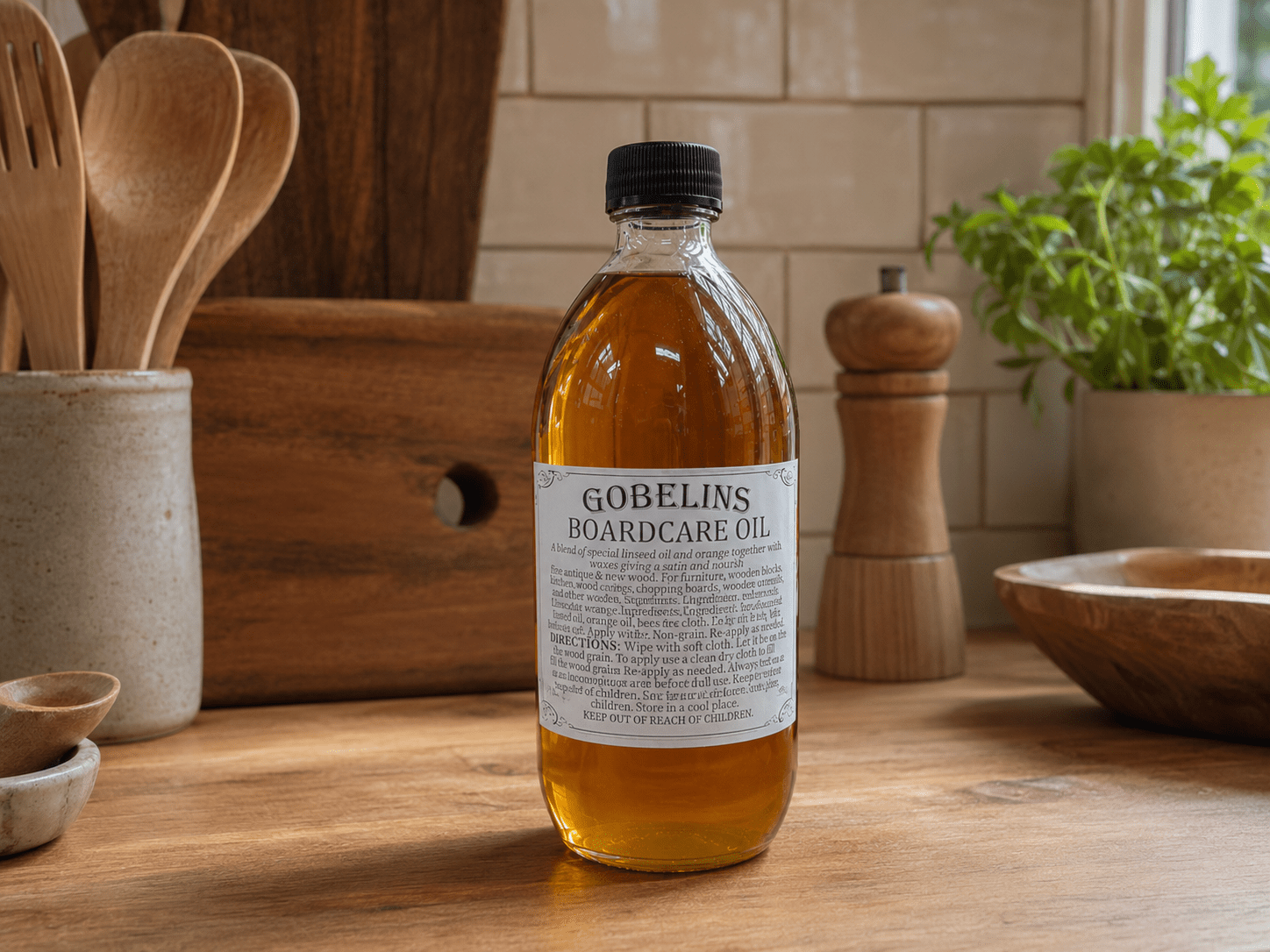
Board care oil is essential for protecting wooden chopping boards in South Africa’s dry and demanding climate. Without proper conditioning, timber absorbs moisture, cracks and deteriorates over time.

What oil should I use on my wooden chopping board?

The answer is simple: a properly formulated board oil designed specifically for timber used in food preparation environments.

Not all oils are equal, and using the wrong product can permanently damage your board.

Why Wooden Chopping Boards Need Protection?

Wood is a natural, porous material. Under a microscope, it contains capillary structures that absorb moisture.

When exposed to:

  • Water
  • Food acids
  • Oils from meat
  • Cleaning chemicals
  • Sunlight

Wood expands and contracts, causing:

  • Surface cracking
  • Drying and splitting
  • Warping
  • Deep fibre exposure

Dry timber also becomes more prone to absorbing contaminants into those exposed fibres.

Proper oiling stabilises the wood fibres and reduces moisture cycling.

A quality board care oil works by:

  1. Penetrating deep into the wood grain
  2. Nourishing and conditioning the timber fibres
  3. Reducing capillary absorption of water
  4. Creating a breathable protective barrier

Unlike varnishes or lacquers, board oils are:

  • Non-film forming
  • Penetrating rather than surface sealing
  • Safe for contact with food when cured properly

This allows the board to remain natural while being protected.

What Happens If You Use the Wrong Oil?

Many people mistakenly use:

  • Vegetable oils
  • Olive oil
  • Cooking oils
  • Non-food-safe furniture oils

These can:

  • Go rancid
  • Create sticky residue
  • Encourage bacteria growth
  • Darken unevenly
  • Leave unpleasant odours

A proper board care oil is specifically formulated to resist spoilage and maintain timber integrity.

How Often Should You Oil a Wooden Chopping Board?

In South African conditions, dry or hot climates, we recommend:

  • Light domestic use: every 4–6 weeks
  • Heavy use or restaurant environments: every 2–3 weeks

Signs your board needs oil:

  • Surface appears dull
  • Wood feels dry
  • Water absorbs quickly instead of beading

Why Gobelins Board Oil Is Formulated for Performance

Our Board Care Oil is designed for:

  • Wooden chopping boards
  • Butcher blocks
  • Wooden kitchen utensils
  • Restaurant preparation surfaces

It penetrates deeply into the grain to:

  • Nourish timber fibres
  • Reduce cracking and splitting
  • Enhance natural wood appearance

Unlike film-forming finishes, it allows the wood to breathe while remaining protected.

How To Apply BoardCare Oil

  1. Ensure the board is clean and completely dry.
  2. Apply oil evenly with a lint-free cloth.
  3. Allow penetration for several hours.
  4. Wipe off excess oil.
  5. Allow to cure before food contact.

For severely dry boards, a second coat may be required.

Final Thoughts

If you value the longevity of your wooden chopping board, whether in a home kitchen or commercial environment, using a properly formulated oil is essential.

It protects.
It stabilises.
It preserves.

If you care about longevity,and natural timber performance, use a properly formulated board oil, not a kitchen shortcut.

Explore our Board Care Oil here → Board Care Oil

 applying Gobelins Board Care oil to chopping board
Home » Interior Wood Care

Is Wood Oil Water-Resistant? What You Need To Know Before Sealing a Table Top

Is Wood Oil Water-Resistant? What You Need To Know Before Sealing a Table Top

wood oil water resistance on wooden table surface

Is Wood Oil Water-Resistant and Safe for Table Tops?

Is wood oil water-resistant? The short answer is yes, but not in the same way as varnish or polyurethane. Wood oil penetrates the timber, enhancing its natural grain while providing moisture resistance from within. However, understanding its limits is crucial before sealing a table top or kitchen surface.

Our range of wood oil finishes is designed to be water-repellent and mildew-resistant making them ideal for table tops, counters, and other frequently used surfaces.

For table tops and smaller interior surfaces, we recommend Danish Oil Low VOC. Its slightly thicker formulation allows for easier, more controlled application while delivering a durable, natural finish that won’t crack or peel like surface coatings.

In normal conditions, drying time is typically a few hours. Cooler, damp, or very humid environments may extend this slightly, so allowing adequate curing time between coats will ensure the best long-term performance.

When applied correctly, a quality penetrating wood oil protects the timber from within, helping your table tops remain beautiful, resilient, and easy to maintain over time.

How Water-Resistant Is Wood Oil Compared to Varnish?

Unlike surface coatings such as varnish or polyurethane, wood oil does not form a thick protective film on top of the timber. Instead, it penetrates the fibres and hardens inside the wood. This makes it resistant to moisture and everyday spills, but not completely waterproof. Prolonged standing water can still cause damage.

When Wood Oil Is Not Enough

Wood oil is ideal for table tops, counters, and furniture, but for areas exposed to constant standing water, such as bathroom vanities or exterior decking, additional protection or more frequent maintenance may be required.

How To Maintain A Wood-Oiled Table Top

Re-oiling every 6–12 months (depending on usage) keeps the timber protected. If water no longer beads on the surface or the finish appears dull, it’s time for a fresh coat.

Does Wood Oil Make Wood Waterproof?

Wood oil makes timber water-resistant, not waterproof. It slows moisture penetration by sealing the pores of the wood, but it does not create a plastic-like barrier. Standing water left for long periods can still penetrate the surface.

Wood Oil vs Polyurethane for Table Tops

Polyurethane forms a hard surface film that sits on top of the timber. Wood oil penetrates into the fibres and enhances the natural grain. Oil is easier to repair and maintain, while polyurethane offers stronger surface resistance but can chip or peel over time.


For more guidance on timber care and finishing, you may also find these articles helpful:

For further advice on choosing the right wood oil for your project, feel free to contact our team, we’re always happy to help.

Home » Interior Wood Care

How to Restore and Protect Wooden Gun Stocks

How to Restore and Protect Wooden Gun Stocks

gun-stocks-and-woodcare-products

Wooden Gun Stocks and WoodCare Products

This may not be something you’d expect to see discussed on a woodcare website, but over the years we’ve had many gun collectors and enthusiasts contact us for advice on restoring and protecting their wooden gun stocks.

Like any piece of wooden furniture, a gun stock needs care over time. Exposure to handling, changing humidity, and general wear can leave the wood looking tired or dry. This is where proper woodcare makes a real difference.

A Question We’re Often Asked

“Hello Lisa,

I’m restoring a wooden rifle stock and would like to know which WoodCare products would be best suited for the job. I want to clean it properly and bring the wood back to life without damaging it.”

Our Answer

Wooden gun stocks respond very well to the same principles used in fine furniture restoration. The key is to clean gently, feed the wood, and build protection gradually.

We often recommend starting with Furniture Reviver to remove grime and old residue while refreshing the surface. From there, an oil finish allows the grain to come alive while still offering protection.

For gun stocks, the following products have proven particularly effective:

  • Pure Tung Oil – Penetrates deeply, enhances grain, and provides a durable, natural finish
  • Tung Oil Blend – Easier to apply, ideal for gradual build-up and controlled results
  • Danish Oil – Offers a balance between protection and a low-sheen finish
  • Liquid Sandpaper – Useful for gentle preparation without aggressive sanding

Application should always follow a “less is more” approach. Thin coats, applied patiently and allowed to dry properly between applications, deliver the best results.

Real Customer Feedback

One of our customers recently shared their experience after restoring a rifle stock using our products:

“I decided to rub down my entire rifle stock, cleaned it with the Reviver, and then applied the Tung Oil Blend. I left 24 hours between coats and followed the ‘less is more’ philosophy. The grain really jumped out, and the final result exceeded my expectations.”

Feedback like this reinforces what we see time and again, when wood is treated with care and the right products, the results speak for themselves.

Final Thoughts

Restoring a wooden gun stock is about respect for the material. With the correct preparation and quality oils, the wood not only regains its appearance but also gains long-lasting protection.

If you’re unsure which product is best for your specific project, feel free to get in touch. We’re always happy to offer guidance based on real-world experience.

Home » Interior Wood Care

Danish Oil FAQs: Common Mistakes & Expert Advice

Danish Oil FAQs: Common Mistakes & Expert Advice

Danish oil finish on wooden table surface

Woodcare frequently asked questions come up every week at Gobelins, from how to apply Danish Oil correctly to fixing common mistakes and maintaining wooden furniture long-term.

To help our customers get the best results from their wood, we’ve put together clear, honest answers based on real experience. Whether you’re sealing a new table, restoring old furniture, or looking for practical wood oil application tips, this guide is designed to help you care for your wood properly and confidently.

By sharing these woodcare questions and answers, we hope to save you time, avoid costly mistakes, and help you achieve a natural, beautiful finish. This page will be updated regularly as we receive more questions about Danish Oil, furniture maintenance, and wood finishing techniques from Gobelins users.

Q: How do I remove excess Oil and fix the finish?

If it has already dried, the least aggressive and most effective solution is to remove the oil using a mild paint stripper suitable for Danish Oil. Apply it according to the manufacturer’s instructions and remove the softened oil gently.

Once the oil has been removed, wash the surface with mineral turpentine, brushing in the direction of the wood grain to clean out any residue from the pores. Wipe the surface down with a clean cotton cloth and allow it to dry completely before reapplying oil.

Q: How should Danish Oil be applied correctly?

Apply Danish Oil sparingly using a cloth or brush, working it into the wood along the grain. Allow it to penetrate for a short time, then wipe off all excess oil. The surface should feel dry to the touch, not sticky or glossy.

Q: How many coats of should I apply?

For furniture such as table tops, two to three thin coats are usually sufficient. Each coat should be allowed to absorb fully before the next is applied. Applying more oil than the wood can absorb will result in a sticky or uneven finish.

Q: What if I think I’ve applied too much oil during application?

If you notice excess oil before it has dried, simply wipe it off with a clean cotton cloth lightly dampened with mineral turpentine. This prevents surface build-up and ensures the oil penetrates properly.

Q: Why doesn’t Danish Oil dry like varnish or lacquer?

Danish Oil is designed to soak into the wood fibres. Once the wood has absorbed enough oil, additional coats will no longer penetrate and may remain tacky. This is why thin applications and wiping off excess oil are essential.

Understanding How Danish Oil Actually Works

Danish Oil is not a surface coating like varnish or lacquer. It is a penetrating oil blend designed to soak into the wood fibres and harden within the grain.

Unlike film-forming finishes, Danish Oil enhances the natural character of the timber rather than covering it. It strengthens the wood from within, providing water resistance while allowing the surface to breathe.

Because it penetrates instead of sitting on top, proper application is essential. Thin coats, adequate drying time, and wiping off excess oil prevent surface build-up and ensure a durable, even finish.

Long-Term Maintenance Advice

One of the biggest advantages of Danish Oil is ease of maintenance.

Unlike sealed coatings that require stripping when damaged, Danish Oil surfaces can usually be refreshed with a light clean and a thin maintenance coat.

For furniture and interior surfaces, a maintenance application once or twice a year is typically sufficient. Outdoor applications may require more frequent attention depending on exposure.

Regular care extends the life of the wood and preserves its natural beauty.

Why Professionals Still Choose Danish Oil

Despite the rise of synthetic coatings, Danish Oil remains popular among woodworkers and restoration professionals because it:

  • Enhances natural grain depth
  • Is easy to repair
  • Doesn’t peel or crack like film finishes
  • Offers a traditional, timeless look

For many projects, it remains one of the most versatile and forgiving wood finishes available.

Finally, for ongoing care, we recommend using Gobelins Traditional Furniture Oil as a regular maintenance product. Used sparingly but consistently, it helps nourish the wood, maintain a natural finish, and keep furniture clean and smelling great without creating surface build-up.

Some History:

A customer just contacted us with this image of a bottle of our Danish Oil label design from over 10 years ago which she has been using with success even until now:

Old Gobelins Danish Oil Bottle and design from 10 years ago

“Hereby a photo of danish oil I bought ages ago. Which one is the replacement now? This one is the best I ever used.”

For product-specific guidance, explore our Danish Oil range or contact us for personalised advice.

Home » Interior Wood Care

Danish Oil – It’s Not On Top, It’s Inside – Expert Advice

Danish Oil: It’s Not On Top, It’s Inside – Expert Advice

Applying Danish oil to solid wood furniture

Gobelins Danish Oil

Unlike varnish, which simply coats the surface of wood, Danish Oil is designed to be absorbed into the timber itself, protecting and nourishing from the inside out.

It’s one of our most popular wood care products and for good reason.

As we like to say: “It’s not on top, it’s inside.”

So What Is Danish Oil?

Danish Oil is a protective finishing oil formulated to penetrate deep into wood, enhancing its natural beauty while providing durable, long-lasting protection.

It can be used on a wide variety of interior wood items, including:

Doors, cabinets, tables, chairs, window frames, toys, cribs, and virtually any interior wood surface that takes your fancy.

Danish Oil has been specifically engineered to penetrate deeply into all types of wood, strengthening and protecting from within rather than forming a surface film.

Traditional vs New Generation Danish Oils

Most traditional Danish Oils (generally not suitable for exterior use) are modified vegetable oils, originally based on tung oil, blended with solvents to improve flow and driers to shorten drying time.

Danish Oil Application on solid wood

New generation oil finishes, such as South African manufactured Gobelins Danish Oil, are suitable for both interior and exterior use.

Gobelins Danish Oil features:

  • A linseed oil base
  • Urethane resins to improve water repellence and resistance to watermarking
  • Light stabilisers for better colour retention and adhesion
  • Biocides to inhibit algae and bacterial growth

The result is a remarkably easy-to-use oil with excellent performance characteristics.

It also includes UV and mildew inhibitors, while still allowing the wood to breathe.

Why we love Gobelins Danish Oil

  • Absolutely no skill required, perfect for beginners and professionals
  • Easy application by cloth, brush, roller, or pad
  • Dries quickly
  • Will not peel, crack, chip, or flake
  • Resists most stains from dirt, water, coffee, wine, grease, and food
  • Enhances natural grain with a beautiful satin finish
  • Food and toy safe when dry

Easy Maintenance

The beautiful finish is simple to maintain with an easy DIY maintenance plan.

Remember: less is more.

If the surface ever becomes sticky, too much Danish Oil has been applied or applied too often.

Looking for an exterior solution?

For outdoor furniture and sundecks, Gobelins also offers a range of 3-in-1 Danish Deck Oil Stains in various wood-inspired colours.

Some History:

A customer just contacted us with this image of a bottle of our Danish Oil label design from over 10 years ago which she has been using with success even until now:

Old Gobelins Danish Oil Bottle and design from 10 years ago

“Hereby a photo of danish oil I bought ages ago. Which one is the replacement now? This one is the best I ever used.”

Click the link & Contact Us for more info

Home » Interior Wood Care