Danish Oil vs Deck Oil: Which Is The Best for South African Timber?

Danish Oil vs Deck Oil: Which Is Best?

Gobelins Danish Oil for interior wood protection on timber surface

Danish Oil vs Deck Oil: What’s the difference?

South African manufactured Gobelins Original Danish Oil and Gobelins Deck Oils are formulated specifically for use in South African climatic conditions.

DANISH OIL

Gobelins Danish Oil Original is suitable for use on all interior woodwork, furniture, kitchen furniture, wooden desks etc. and is also Eco-friendly; safe, non-toxic, and certified as complying with the requirements of EU regulation BSN71-3 allowing the product to be used as a coating on children’s toys.

We have now expanded our range to include three Danish Oil Products: Danish Oil Original, Danish Oil MT and Danish Oil Low VOC.

Our first product was the Danish Oil Original. This contains all the finest ingredients available such as Pure Gum Turpentine as a solvent, Linseed Oil, and then the same additives as the other Oils, in varying proportions.

The Danish Oil MT is exactly the same as the Original Danish Oil except that the solvent used is a mineral solvent, and therefore is less expensive than the Original.

The LOW VOC Danish Oil is the same as the Danish Oil Original but with the absolute minimum amount of solvent which allows the product to be classified as ‘Low VOC’ with regards to it’s environmental footprint. The product effectively becomes thicker and is good for cabinet makers and craftsmen particularly. If necessary it can be diluted with either Gum Turpentine or Mineral turpentine.

DECK OILS

Gobelins Deck Oils (and even our Gobelins Danish Oil Low VOC) are suited to exterior woodwork such as doors and windows, sundecks and patio furniture.

Application may be by dipping, spraying, brushing or a combination of these methods. Drying time is short, and decking can be walked on within an hour of application. No de-nibbing is required between coats as dust doesn’t adhere to the drying oil. For maximum benefit, 3 coats are recommended the first time Gobelins Deck Oil is applied. Thereafter a single coat is usually adequate when re-coating. Maintenance is simple; wash off accumulated dirt and grease, bird droppings etc. with soapy water, rinse and allow to dry before re-applying another coat of Gobelins Deck Oil. Re-coating at least once a year is recommended, but with no need to sand or remove previous coats this is a relatively painless task. Because the finish penetrates into the surface of the wood it doesn’t show scratches, nor flake, peel or blister.

The products have a vegetable oil base combined with vegetable solvents, and a minimum quantity of the best quality additives available to improve water repellent qualities, resistance to UV rays present in the harsh South African sunlight, and biocides that help preserve the coating by inhibiting the growth of algae and bacteria.

Gobelins Oils are also economical in use, typically covering 10-15 square meters per litre per coat which makes it very cost effective.
For more information on our oils, see here.

For exterior decks exposed to harsh UV and coastal conditions, see our professional-grade Deck Oil South Africa solution.

Board Oil That Makes A Difference

What Oil Should You Use On A Wooden Chopping Board?

Board care oil is essential for protecting wooden chopping boards in South Africa’s dry and demanding climate. Without proper conditioning, timber absorbs moisture, cracks and deteriorates over time.

What oil should I use on my wooden chopping board?

The answer is simple: a properly formulated board oil designed specifically for timber used in food preparation environments.

Not all oils are equal, and using the wrong product can permanently damage your board.

Why Wooden Chopping Boards Need Protection?

Wood is a natural, porous material. Under a microscope, it contains capillary structures that absorb moisture.

When exposed to:

  • Water
  • Food acids
  • Oils from meat
  • Cleaning chemicals
  • Sunlight

Wood expands and contracts, causing:

  • Surface cracking
  • Drying and splitting
  • Warping
  • Deep fibre exposure

Dry timber also becomes more prone to absorbing contaminants into those exposed fibres.

Proper oiling stabilises the wood fibres and reduces moisture cycling.

A quality board care oil works by:

  1. Penetrating deep into the wood grain
  2. Nourishing and conditioning the timber fibres
  3. Reducing capillary absorption of water
  4. Creating a breathable protective barrier

Unlike varnishes or lacquers, board oils are:

  • Non-film forming
  • Penetrating rather than surface sealing
  • Safe for contact with food when cured properly

This allows the board to remain natural while being protected.

What Happens If You Use the Wrong Oil?

Many people mistakenly use:

  • Vegetable oils
  • Olive oil
  • Cooking oils
  • Non-food-safe furniture oils

These can:

  • Go rancid
  • Create sticky residue
  • Encourage bacteria growth
  • Darken unevenly
  • Leave unpleasant odours

A proper board care oil is specifically formulated to resist spoilage and maintain timber integrity.

How Often Should You Oil a Wooden Chopping Board?

In South African conditions, dry or hot climates, we recommend:

  • Light domestic use: every 4–6 weeks
  • Heavy use or restaurant environments: every 2–3 weeks

Signs your board needs oil:

  • Surface appears dull
  • Wood feels dry
  • Water absorbs quickly instead of beading

Why Gobelins Board Oil Is Formulated for Performance

Our Board Care Oil is designed for:

  • Wooden chopping boards
  • Butcher blocks
  • Wooden kitchen utensils
  • Restaurant preparation surfaces

It penetrates deeply into the grain to:

  • Nourish timber fibres
  • Reduce cracking and splitting
  • Enhance natural wood appearance

Unlike film-forming finishes, it allows the wood to breathe while remaining protected.

How To Apply BoardCare Oil

  1. Ensure the board is clean and completely dry.
  2. Apply oil evenly with a lint-free cloth.
  3. Allow penetration for several hours.
  4. Wipe off excess oil.
  5. Allow to cure before food contact.

For severely dry boards, a second coat may be required.

Final Thoughts

If you value the longevity of your wooden chopping board, whether in a home kitchen or commercial environment, using a properly formulated oil is essential.

It protects.
It stabilises.
It preserves.

If you care about longevity,and natural timber performance, use a properly formulated board oil, not a kitchen shortcut.

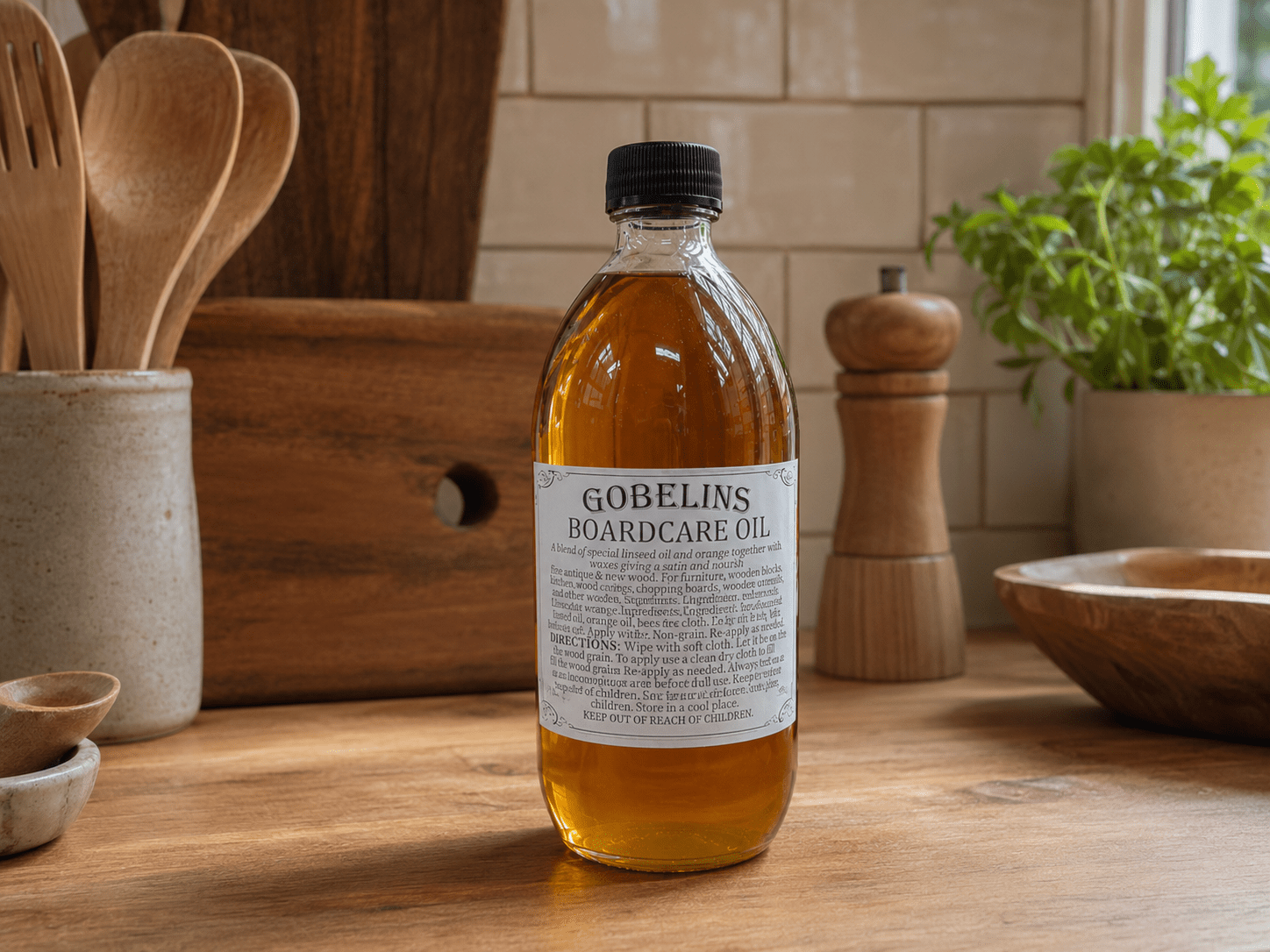
Explore our Board Care Oil here → Board Care Oil

 applying Gobelins Board Care oil to chopping board
Home » The WoodCare Company » Page 2

How Often to Oil a Deck in South Africa: Expert Maintenance Tips for 2026

How Often to Oil a Deck in South Africa: Expert Maintenance Tips for 2026

oil a deck outdoor timber decking in South Africa

If you’re wondering how often to oil a deck in South Africa, the answer depends on sun exposure, coastal salt air and foot traffic, but most decks need oiling every 6–12 months.

So how often should you oil a deck in South Africa?

The honest answer: it depends on where you live and how exposed your deck is.

How Often Should You Oil a Deck in South Africa?

For most South African homes:

  • Coastal areas: Every 6–8 months
  • High UV inland areas: Every 8–12 months
  • Covered or shaded decks: Every 12 months

Signs Your Deck Needs Re-Oiling

If you notice any of the following, it’s time:

  • Water no longer beads on the surface
  • The timber looks dull or faded
  • The wood feels dry or rough
  • Colour is uneven in sun-exposed areas

A simple test: splash water on the deck.

If it soaks in instead of repelling, your oil protection is gone.

That’s your signal.

Why South African Decks Need More Frequent Maintenance

South Africa’s UV levels are significantly higher than many European regions. Add coastal salt air in areas like Cape Town, Durban, or the Garden Route, and timber deteriorates even faster.

  • UV breaks down lignin in hardwood.
  • Moisture enters.
  • Expansion and contraction begin.
  • Cracking follows.

Deck oil prevents this by penetrating into the timber rather than sitting on the surface.

Unlike varnish or cheap sealers, proper penetrating deck oil nourishes and protects from within.

Coastal vs Inland Oiling Schedule

If you’re near the ocean:

Salt accelerates moisture absorption and surface breakdown. Re-oiling every 6–8 months is often necessary.

If you’re inland but exposed to full sun:

UV becomes your biggest enemy. Expect re-oiling around once a year, depending on sun exposure.

If your deck is covered:

You can extend intervals, but still inspect annually.

What Happens If You Don’t Oil Regularly?

Skipping maintenance doesn’t just affect appearance.

It leads to:

  • Surface cracking
  • Splitting
  • Raised grain
  • Structural weakening over time

Proper hardwood deck maintenance is not cosmetic. It’s structural protection.

Replacing boards costs far more than maintaining them.

The Smart Way to Maintain Your Deck

Instead of asking “How often should I oil?” ask:

“Is my deck still protected?”

Inspect twice a year.
Clean properly before oiling.
Use a high-quality penetrating deck oil designed for South African conditions.

Consistency beats emergency repairs.

Final Thoughts

Most South African decks need oiling once a year at minimum, and more often in coastal or high-UV areas.

If water soaks in, it’s time.

Protect the timber before it dries, cracks, and fails.

Your deck is an investment. Maintain it like one.

Home » The WoodCare Company » Page 2

Best Deck Oil in South Africa: What actually Protects Your Timber?

Deck Oil that protects your wood. This Is Iroko wood with Havana Deck Oil

Deck Oil in South Africa: What actually Protects Your Timber?

Outdoor decks in South Africa take a beating. Intense UV exposure, coastal salt air, heavy rains, and dry heat cycles can destroy timber faster than most homeowners expect. Choosing the right deck oil isn’t about colour, it’s about protection, penetration, and long-term performance.

Not all deck oils are created equal. And most fail for one simple reason: they sit on the surface instead of feeding the wood.

What Makes a Deck Oil in South Africa?

The best deck oil for South African conditions must do three things:

Surface coatings like varnish create a film. That film eventually cracks under sun and moisture pressure. Once it cracks, water gets underneath. Then the real damage begins.

A proper penetrating deck oil works from within the timber, not on top of it.

Why Varnish and Cheap Sealers Fail Outdoors

Varnish might look glossy at first, but in harsh climates it becomes brittle. When UV exposure breaks down the surface layer, it starts to peel. Maintenance then becomes sanding, stripping, and re-coating, again and again.

Penetrating deck oil behaves differently:

  • No peeling
  • No flaking
  • No brittle surface layer
  • Easier maintenance over time

Instead of fighting the timber, it works with it.

Deck Oil for Coastal and High-UV Areas

Coastal decks in South Africa face additional stress from salt air and wind-driven moisture.

A high-quality UV-resistant deck oil should:

  • Contain UV inhibitors
  • Replace natural oils lost through sun exposure
  • Reduce moisture absorption
  • Slow down greying and colour loss

If water no longer beads on your deck, protection has worn off. That’s your signal to re-oil.

How Often Should You Oil a Deck in South Africa?

Most hardwood decks need maintenance every 12–18 months, depending on exposure.

Full sun decks may require attention sooner.
Covered decks may last longer.

Regular inspection is more important than rigid timelines.

If the timber looks dry, faded, or absorbs water quickly, it’s time.

Choosing a Trusted Deck Oil Brand

In a market filled with heavily marketed products, reputation matters.

Look for:

  • Proven long-term performance
  • Products designed for South African climate conditions
  • Professional contractor trust
  • Penetrating oil technology rather than surface film

Deck oil should be structural protection, not cosmetic shine.

A premium hardwood deck is an investment. The right deck oil protects that investment against sun, moisture, and time. Choose a penetrating system designed for real outdoor conditions, and maintenance becomes simple, predictable, and long-lasting.

Explore Gobelins Deck Oil colour range available in South Africa. From natural clear finishes to deep Imbuia and Ebony tones, find the perfect timber colour for your decking project.

Home » The WoodCare Company » Page 2

Hardwood Deck Maintenance: When Is the Best Time to Clean and Re-Oil?

Hardwood Deck Maintenance: When to Clean and Re-Oil Your Deck in South Africa

Hardwood Deck Maintenance with deck oil

Outdoor hardwood decks in South Africa face extreme conditions, intense UV, coastal salt air, heavy rains, and dry heat. Without proper hardwood deck maintenance, even the best timber will dry out, fade, and eventually crack.

The key isn’t reacting when the damage is visible.
The key is maintaining your deck before it deteriorates.

How Do You Know When Your Deck Needs Re-Oiling?

Most hardwood decks need cleaning and re-oiling when you notice:

  1. The surface looks dull or faded
  2. Water no longer beads on the timber
  3. The wood feels dry to the touch
  4. Colour loss, especially in full sun areas

If water soaks in instead of repelling, your deck oil protection is gone.

That’s your signal.

Best Time of Year to Oil a Deck in South Africa

Timing matters.

The ideal conditions for deck oil application are:

  • Warm, dry weather
  • No rain forecast for 24–48 hours
  • Moderate temperatures (not peak midday heat)

In coastal regions, salt air and wind accelerate drying. Regular maintenance, typically once a year, sometimes twice in high-exposure areas, keeps timber stable and protected.

Why Deck Oil Is Better Than Varnish for Outdoor Timber

Here’s the truth:

Varnish forms a surface film.
When UV and moisture hit it, it cracks and peels.

Penetrating deck oils work differently.

High-quality hardwood deck oils soak into the timber, nourishing it from within.

They:

That’s why professionals prefer oil systems over surface coatings for outdoor decks.

How Often Should You Maintain a Hardwood Deck?

In South African conditions:

  • High sun / coastal exposure → every 6–12 months
  • Moderate exposure → annually
  • Shaded / covered decks → inspect yearly

Consistent maintenance is far cheaper than sanding and restoration.

Protecting Your Investment

Hardwood decking is a premium installation. Maintaining it with the right deck oil system ensures:

  • Longer lifespan
  • Rich natural colour
  • Reduced cracking
  • Lower long-term costs

Proper hardwood deck maintenance isn’t cosmetic.
It’s structural protection.